A thought on evolving

When I was a university student I was introduced to the saying, “You can never step in the same river twice.”  This saying immediately resonated with me and has stayed with me to this day. More recently (on social media, I believe) I came across the saying, “Trauma changes us permanently.”  These two sayings both speak about the evolutionary nature of human existence. We are changed by our experiences and can never again be the person we once were. We can reflect upon our past, we can cherish the person we were at certain times in our lives, but we cannot be that person again. We have been changed, partly by the ageing process, but more so by the experiences we have lived and the impact they have had on us.

This is something we may embrace, or we may rage against. Or this may be something to which we are ambivalent. Regardless, this is a fact of life. I think it is a valuable lesson to learn. As we walk our path sometimes we are moving forward, sometimes we are standing still, sometimes we are talking a step sideways. Although at times we may perceive ourselves to be going backwards, we are never stepping back into who we were and where we were at a previous time in our lives. That time is gone. That person is gone. We need to learn the lessons of those times and try to grow as a person, but as much as we may cherish the past, we cannot relive it.

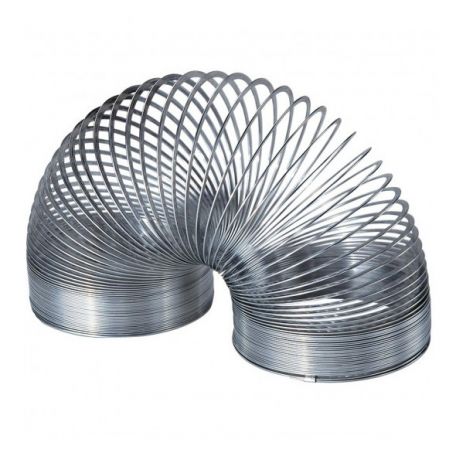
Something along these lines has occurred in my life recently. In a sense I found myself back where I was about 4 years ago, however upon arriving back at that place I have discovered that the experience now is entirely different to what it was 4 years ago. I loved the person I was 4 years ago however I am not that person now and I have no desire to be that person any longer. That person was searching, embarking upon an adventure. The person I am now is more settled and content having achieved numerous life goals upon that adventure. Stepping back to that starting point is in fact not stepping back to that starting point at all, but rather stepping into a new point. If life is cyclical in nature I see it not so much as a circle but spiralling around like an organic slinkie, living and breathing and moving, spiralling around and around but still moving forward.

I suppose my point is simply to be aware of the past, who you were, where you were. Embrace your past, the experiences and the learnings both good and bad, gentle and harsh. Do not, however, yearn for the past. It is gone and it is not coming back. You will not become who you once were. If you step back there, the past will be but a shadow lingering around you. Every step, every moment, you are a new you. Every day is a chance to learn more, to grow. The past will guide us, but the present is a glorious new journey to embrace every time the sun rises and we open our eyes from slumber.

As Bono said, “It’s a beautiful day, don’t let it get away.”  Thanks Bono.

Michael Cunliffe
What is “Bad Poetry”?

Perspective. Preference. Taste. Resonance.

These are very personal things. A reader’s experience of poetry and their reaction to it is also deeply personal. What resonates with one reader may not resonate with another.  So, who is to say if a poem is bad or not?

If someone were to read an extremely simplistic presentation of words, a veritable “thought for the day” style of poem that, in two lines, does no more than make a person feel…perhaps deeply…perhaps shines a light into a dark corner of their mind…has that piece of writing not achieved something significant?

Must we all be devotees of Shakespeare, Wordsworth and Frost? If the rise of the Instapoets has achieved one positive thing it has been to touch the “common person” with the written word in a way that – in the modern age – the classic poets have largely failed to do.

I’d like to think we could all drop our literary elitism at the door for long enough to acknowledge the value in that.

Bad poetry is not bad if it brings a little light to the darkness of someone else’s world.

Michael Cunliffe

A Deafening Silence

Silent on a stool at the servery,
mind drifting upon nothingness,
I am uneasy.
This is so faintly familiar –
a distant grinding, like a coffee machine
I borrowed once –
warm dripping water,
a faintness in my hearing
as dead as a moth bobbing in water
whilst breaths of wind nibble the pool’s edge.
I am restless
in this noiseless vacuum –
relentless –
strange yet strangely familiar –
a yesterday of someone else’s.
Air switched off – a wi-fi of silence –
no device is no device.
I have a distant inclination
of life twenty years ago,
did I live through that?
Now I sit unstimulated,
there are pinpricks up and down my spine,
my fingers twitch, my eyes squint.
My device, my device,
where did I leave it?
I can barely believe this is me –
the same me –
when sound was not necessary,
when silence was not daunting,
when stimulation was not constant.
Is this really me?  A gentle sense
of passing time – infectious, how it grows –
is a silence, impatient and deafening,
a yesterday that was not born
to an addiction of stimulation.

Michael Cunliffe

Everything About The Kitchen Sink

When I am on a meal break at work, I always find the side of the kitchen sink littered with dirty glasses and cutlery used by other staff members, just left sitting around for someone else to clean.

At the start of my meal break I always fill the sink with hot, soapy water to wash my dishes.  At the end of my meal break, after the dishes are done, I always let the water out of the sink.

One day anther staff member asked me to leave the water in the sink so he could use it. At the end of his meal break he washed his own dishes and the dirty dishes strewn around the edge of the sink, which I don’t do.

I walked into the meal room at the end of my shift to rinse my coffee mug to find a sink full of gungy, grotty cold dishwater. The water was too disgusting for anyone to want to put their hand in to pull the plug out.  This is always my fear.

One person may wash their dishes in their own water and leave the sink empty for the next person.  One person may leave water in the sink for the next person, but never return to pull out the plug. One person will never wash their own dishes, leaving them for someone else to clean. One person is left with the task of sinking their hands into someone else’s dirty water.

Which person are you?

Michael Cunliffe

A thought on coping

I’ve been talking to a few people lately about coping with day-to-day life.  Or more specifically talking about the notion of not coping, what that means, what that looks like, and how to deal with it.

We all face struggles in our life, and we all have a different capacity to cope with those struggles.  Sometimes our struggles feel overwhelming.  Other times we feel a sense of guilt about being consumed by our own person struggles when there are so many catastrophes emblazoned across the media week after week: global pandemic, war in Ukraine, climate change, mass murders in the US.  So many catastrophes that our own struggles can at times feel trivial.

Our own struggles, however, are not trivial.  We are only the sum of our own experiences.  Catastrophes going on in other parts of the world impact on us, but those things are generally not day-to-day reality for us.  For many of us global catastrophes play out on a screen.  Our own personal struggles are more real, and often, more challenging.  And that’s okay.  It’s not selfish, that’s just what being human is like. 

I think for many people it can be very difficult to reflect inwardly, to look at yourself and say, “these are my challenges, they are legitimate and I am struggling with them.”  It can be very hard to admit that to yourself, let alone to others.  I have been talking to a number of people lately about giving yourself permission to say, “I am struggling,” or “I have a problem,” or “I am not coping”.  To say to yourself, “this is how I feel.  It is real.  It is okay.”

If that is how you are feeling right now, you are not alone.  Believe me, we have all been there.  I have been there many times.  There is nothing wrong with struggling, or failing, or falling over.  That’s a part of what it means to be human.   It’s a part of learning and growing.  And it is a part of the journey toward becoming the best person we can be. We can’t really know the full experience of being human without struggling, failing and falling over.  We can’t really be the best person we can possibly be if we haven’t faced this type of adversity.  It’s not fun but in a very real sense it is necessary.

We all need to go through challenging periods in our life, but we should not be afraid of “failing”.  In failing there are lessons we can learn. There are lessons everywhere. We should be focused on the “getting up” and “moving forward”.  We should celebrate coping with our struggles.  It’s not about being perfect or not perfect.  It’s about learning from what has happened and finding ways to improve, ways to grow.  In the long-term these are actually beneficial experiences. 

I know that it is hard to accept feeling like you’ve failed or feeling like you haven’t lived up to the expectations of yourself or of others, or feeling like you’re weak. Social conditioning plays a huge part in these feeling.  We’re taught from an early age by society, by school, by film and television, (in the modern world) by social media that we must be perfect and strong and have it all together every minute of every day.  Our brains have been programmed over the course of our entire lives to think like that, but this sets us up for failure. We feel an overwhelming sense of pressure to cope and to succeed and to be seen doing it. Many people feel pressure to broadcast images of a successful life on social media. It is simply not realistic to expect ourselves to cope every day with the stress and the trauma and the struggle that is normal in our lives. 

The way that I see it is that “not coping” is actually how we do cope. “Not coping” is normal. “Not coping” is fine. In fact, it is better for our brain to fail or fall down or just check out sometimes. It’s hard to believe, it’s hard to accept, but it really is okay. I think our brain is supposed to do that. It’s how we keep things in balance.  It’s how unconsciously we manage ups and downs, manage pressure, and how we learn.  “Not coping” is just one step in a long process of coping, it is a part of the learning and growing on our journey through life.

A frustrating thing with hitting rock bottom and trying to pick yourself up is that generally it is a very slow process.  It is hard work.  It can take a long time. It’s not like in Hollywood movies, or in a sitcom where all the complexities and challenges in life are ironed out within half an hour.  That’s just not reality.  The process can take years in some circumstances, but that’s the process you must go through to get from rock bottom to back on your feet, but you must BELIEVE that you WILL come out the other end, and you will be better for the experience.  If you believe that you can, if you keep faith with yourself that you are capable and that you are worthwhile, then you will get through the most challenging times in your life and come out the other end better for the experience. 

How do I know all of this?  I don’t.  I’m not an expert.  These are just my perceptions, a collection of thoughts based on my personal experiences, things I’ve read, and my observations of the experiences of others.  It’s fine to disagree with me or to disregard everything I’ve written here.  This is just the way I see things.  As John Lennon said, “Life is what happens to you while you’re busy making other plans.”  Thanks John.

Michael Cunliffe

A thought on leadership

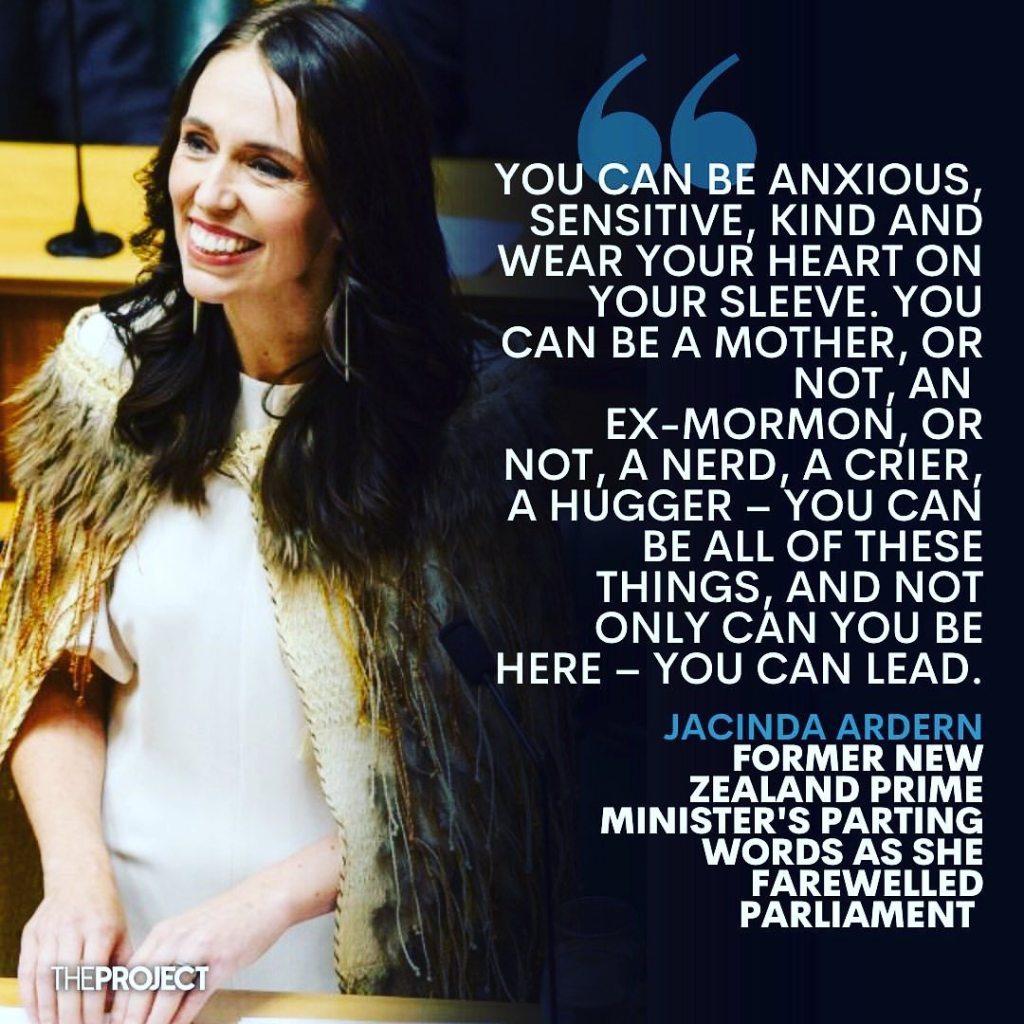
Leadership can find many forms. As humanity blindly stumbles it’s way through another decade of self-serving leaders pursuing money and power and self-interest, we desperately need leadership that is different. We need leaders that are kind. We need leaders with compassion. We need leaders that bring diversity. We need leaders who are inclusive. We need leaders who are not afraid of vulnerability. We need more leaders like Jacinda Ardern.

❤️❤️❤️❤️❤️